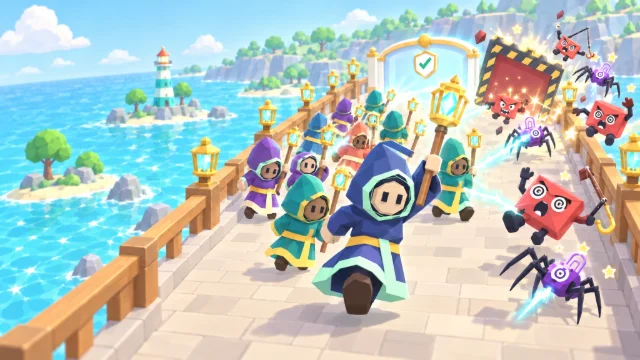
Bridge Survival
Top 3 of 50 · all-time
- 1st place: Lagtrain 27,809 points
- 2nd place: KD 27,691 points
- 3rd place: Big Jonny 27,674 points
Defend a castle, build a wall of security towers, lead a squad of wizards down the Firewall Road, run a law firm's security for 24 months, battle phishers on Skull Island, rally your team as its Cyber Champion, fly out to close a big deal or ship code safely with an AI coding agent at your shoulder, and pick up the everyday habits that stop real scammers. Cartoon games that play right in your browser: no download, no sign-up.
Browse all games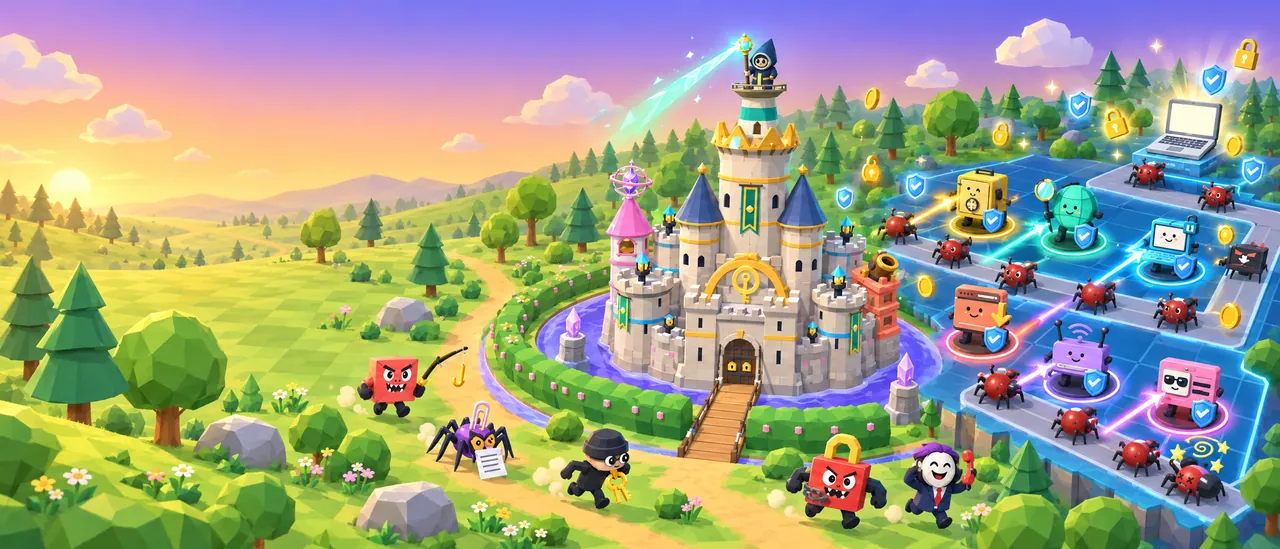
Game library
Free cyber security games at about 10 to 15 minutes a run. Every upgrade you buy, habit gate you pick, security project you roll out, phish you report, team initiative you run, call you make on a business trip and pull request you send for review is a real-life habit or control that keeps scammers out.
8games out now · more on the way
Pick safe habits to grow your wizard squad, banish scam villains and beat the boss in all 5 sectors.
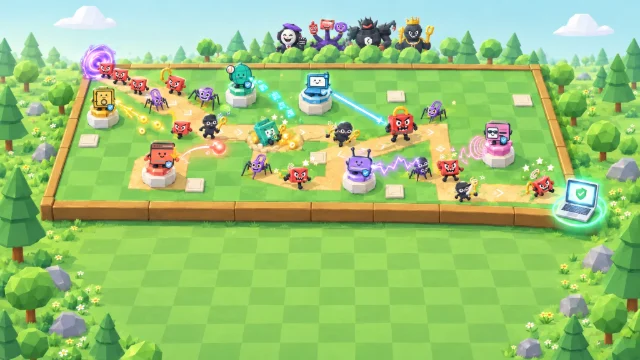
Place security towers, upgrade them with real-life habits and stop 12 waves of scams before they reach your laptop.
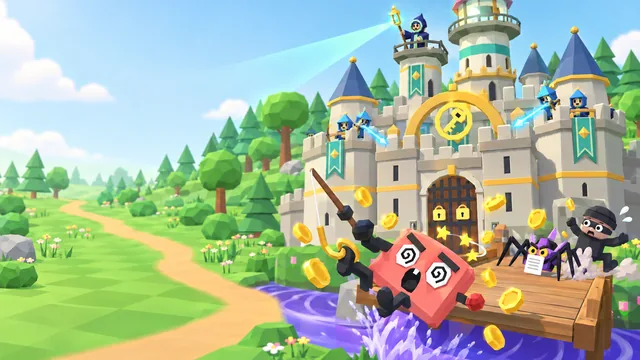
Adopt real-life security habits, grow your castle and hold off 12 waves of scammers, malware and snoops.

Lead three ninja fish against the Black Hat Barracudas, report the phish in every crate and win the battle for Skull Island.

Fly out to close a big deal, make the right call at each of 7 stops and report any slip fast to bring the deal home.

Make the secure call every hour of a developer's day, keep your AI coding agent on a short leash and report any slip fast.

Volunteer as Cyber Champion, win six colleagues over and make it through 12 months of scams to earn the Security Culture Award.
Pick real security projects, outwit cartoon attackers and go 24 months without a breach to make CISO.
New cyber security adventures are in the workshop: new worlds, new villains, the same everyday habits.
The original turn-based Security Architect and Social Engineer, CanIPhish's first cyber security games, live on in the legacy arcade with their leaderboards. Saved game codes keep working.
Hall of Fame
The three best runs on each game. Finish in the top 50 and you can claim your spot on the leaderboard with a gamer alias: no account, no email.
Top 3 of 50 · all-time
Top 3 of 50 · all-time
Top 3 of 50 · all-time
Top 3 of 50 · all-time
Top 3 of 50 · all-time
Top 3 of 50 · all-time
Top 3 of 50 · all-time
Top 3 of 50 · all-time
Scores are checked for fair play before they reach the board. One spot per player per game: your best run counts.
How it works
People remember what they practise. These online security awareness games turn good habits into moves you make under pressure, so they stick long after the game is over.
Castle Defense, Tower Defense, Bridge Survival, Security Architect Simulator, Phish Wars, Cyber Champion Simulator, Secure Traveler Simulator or Software Developer Simulator. All free, and a run takes about 10 to 15 minutes.
No download and no account. Works on laptops, desktops, tablets and phones, in up to 75 languages.
Every upgrade, shield and security project is a real-life habit or control: unique passwords, multi-factor authentication, updates, spotting scams and more.
Finish in the top 50, pick a gamer alias and join the leaderboard. Beat your best to climb.
Who it's for
Good security is a set of habits, not a lecture. These cybersecurity games let people practise those habits in a low-stakes world, which is why they work for a new starter, a Year 9 class and a security team's awareness program alike.
Cyber security games for employees work because people remember what they practise. A run fits in a break, every upgrade mirrors a policy you already have (unique passwords, multi-factor authentication, updates, reporting phishing), Security Architect Simulator shows why the security team asks for them, Phish Wars makes reporting a phish the winning move, Cyber Champion Simulator shows how a champion wins a team over without nagging, Secure Traveler Simulator takes the same habits on a business trip, where a slip reported fast stays a close call, Software Developer Simulator shows developers how to ship safely with an AI coding agent on the team, and a leaderboard turns security awareness month into a friendly contest.
No account, no personal details and plain-language tips make these a safe pick for classrooms, coding clubs and families. Cartoon villains and short waves keep younger players hooked, older students can try a security career in Security Architect Simulator, and the habits they learn are exactly the ones adults need online.
Use the free games as an icebreaker, then assign them from the CanIPhish training library to track completions, run a private company leaderboard and pair them with realistic phishing simulations.
See the training libraryFor security & IT teams
Castle Defense, Tower Defense, Bridge Survival, Security Architect Simulator, Phish Wars, Cyber Champion Simulator, Secure Traveler Simulator and Software Developer Simulator are part of the CanIPhish security awareness training library. Assign them to employees alongside realistic phishing simulations, see who has played, and run a leaderboard just for your organisation.
No trial periods. No credit cards. No sales calls.
Free security awareness training
FAQ
Everything you need to know about playing, learning and climbing the leaderboards.
Back to the gamesThe best ones teach habits you'll use in real life and are fun enough to play again. The games on this page are free online cybersecurity games from CanIPhish, a phishing simulation and security awareness training company. They range from defense and action games to strategy games and simulations, and in every one you win with real security habits and controls. A run takes about 10 to 15 minutes, and every game has its own top-50 leaderboard.
Yes. Every game here is completely free, with nothing to download and no account to create. They run in any modern browser. You only choose a gamer alias if your score makes the top 50 and you want it on the leaderboard.
Short, replayable games work best at work, because people can finish a run over a coffee break. A run takes about 10 to 15 minutes, and the moves that win stand for habits your security policy already asks for: unique passwords, multi-factor authentication, updates, backups and reporting phishing. Some games also show the security team's side, so people see why those policies exist. Run a friendly leaderboard challenge during security awareness month, or assign the games through CanIPhish to track who has played.
Yes. The cartoon villains, plain-language tips and no-account play make them a safe pick for classrooms, coding clubs and families. Each game is labelled Beginner or Intermediate: the Intermediate games have more reading and workplace scenarios, so they suit teens and older students, including anyone curious about a career in cyber security. Students learn the same habits adults need, such as pausing before they click and thinking before they share. Younger kids may want a grown-up nearby to help with the reading, and nobody needs to share personal details to play.
Everyday habits that stop real scams: using strong, unique passwords and passkeys, turning on multi-factor authentication, pausing before you click, spotting phishing and deepfake scams, reporting anything suspicious, installing updates, securing your home Wi-Fi and thinking before you share. Some games also show the other side: how a security team layers real controls to stop attacks, and how a security champion builds a culture where people report scams. Along the way, bonus questions and real-life decisions check what you've picked up.
People remember what they practise, so the games turn real security habits and controls into the moves you make under pressure, and their villains stand for real threats, from phishing and stolen passwords to ransomware and deepfakes. The games reward the choices that work in real life: layering defences instead of relying on one, pausing to check before you act, and reporting a phish instead of opening it. Plain-language tips along the way tie each lesson back to real life.
Each game has its own leaderboard of the top 50 players of all time. When a run finishes in the top 50 you can claim your spot with a gamer alias of 2 to 15 characters. You hold one spot per game and your best run counts. Scores are checked for plausibility before they're saved, and aliases are screened to keep the board friendly.
Yes. The games run in any modern browser, and they're at their best on a laptop or desktop. Most use 3D graphics (WebGL), so keep hardware acceleration turned on. On a phone, tap Play to open the game full screen. Some games ask you to turn your phone sideways; each game's page has the details.
Yes. All of these games are part of the CanIPhish training library, so you can assign them to employees, track completions, run private leaderboards and pair them with phishing simulations. You can start with a free account.
No account or email is needed. When you claim a leaderboard spot, we keep your alias, your score and the run's details (how far you got, how long it took and the date), a random ID for this browser, and a scrambled code derived from your network address. That code is used only to stop one network filling the board, and it is never shown. If you're signed in to a CanIPhish account when you claim a spot, or later sign in on the browser you claimed it on, we also keep that random ID with your account, so your alias follows you to any browser you sign in on. The leaderboards are all-time, so an entry stays until it drops out of the top 50. To have an entry removed, contact support@caniphish.com. Your alias is public, so please don't use your real name.